
2023 AIME II 第 10 题
先试着解答 2023 AIME II 第 10 题,然后核对你的答案与精心整理的解答,解答来自 LIVE by Po-Shen Loh。你也可以参加完整限时模拟考试、查看全部 2023 AIME II 解答,或核对答案。
所有题目均经美国数学协会(MAA)官方合法授权使用。
10.
设 为把整数 到 放入一个有 个格子的 网格中的方式数,使得任何共边的两个格子中的数之差都不能被 整除。下图给出了一种这样的放法。求 的正整数因数个数。
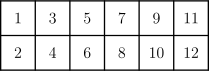
Let be the number of ways to place the integers through in the cells of a grid so that for any two cells sharing a side, the difference between the numbers in those cells is not divisible by One way to do this is shown below. Find the number of positive integer divisors of
小提示:
共边格子的模 余数必须不同;先数余数图案,再乘以 来放入实际数字
Cells sharing a side must have different residues mod count the residue patterns first, then multiply by to place the actual numbers
大提示:
每一列显示两个不同的余数;从任意一列出发,三种无序余数对中的每一种都能以恰好一种方向出现在下一列,而且每种余数对必须出现两次
Each column shows two distinct residues; from any column, each of the three unordered residue pairs can come next in exactly one orientation, and each pair must occur twice
解答:
条件等价于相邻格子的数模 余数不同。在 中,每个余数类恰好有 个数,所以 ,其中 是用余数 填满网格的方式数,每个余数使用 次,且相邻格子余数不同。
一列是一个有序对 ,其中两个余数不同。若当前列为 , 为第三个余数,则下一列必须是 、、 之一:三种无序对 、、 都恰好以一种允许的方向出现。因此一个余数图案由六个无序对的序列以及第一列的方向决定。因为每个余数必须出现 次,所以三种余数对都必须恰好使用两次,给出 个序列,且 。
因此 ,它有 个正因数。
The condition says adjacent cells have different residues mod Each residue class among has exactly members, so where is the number of ways to fill the grid with residues each used times, with adjacent cells different.
A column is an ordered pair of distinct residues. If the current column is and is the third residue, the next column must be one of each of the three unordered pairs occurs in exactly one allowed orientation. So a residue pattern is determined by the sequence of six unordered pairs together with the orientation of the first column. Since each residue must appear times, each of the three pairs must be used exactly twice, giving sequences and
Therefore which has positive divisors.
其他年份的第 10 题
1983 AIME · 1984 AIME · 1985 AIME · 1986 AIME · 1987 AIME · 1988 AIME · 1989 AIME · 1990 AIME · 1991 AIME · 1992 AIME · 1993 AIME · 1994 AIME · 1995 AIME · 1996 AIME · 1997 AIME · 1998 AIME · 1999 AIME · 2000 AIME I · 2000 AIME II · 2001 AIME I · 2001 AIME II · 2002 AIME I · 2002 AIME II · 2003 AIME I · 2003 AIME II · 2004 AIME I · 2004 AIME II · 2005 AIME I · 2005 AIME II · 2006 AIME I · 2006 AIME II · 2007 AIME I · 2007 AIME II · 2008 AIME I · 2008 AIME II · 2009 AIME I · 2009 AIME II · 2010 AIME I · 2010 AIME II · 2011 AIME I · 2011 AIME II · 2012 AIME I · 2012 AIME II · 2013 AIME I · 2013 AIME II · 2014 AIME I · 2014 AIME II · 2015 AIME I · 2015 AIME II · 2016 AIME I · 2016 AIME II · 2017 AIME I · 2017 AIME II · 2018 AIME I · 2018 AIME II · 2019 AIME I · 2019 AIME II · 2020 AIME I · 2020 AIME II · 2021 AIME I · 2021 AIME II · 2022 AIME I · 2022 AIME II · 2023 AIME I · 2024 AIME I · 2024 AIME II · 2025 AIME I · 2025 AIME II · 2026 AIME I · 2026 AIME II