
2007 AIME II 第 3 题
先试着解答 2007 AIME II 第 3 题,然后核对你的答案与精心整理的解答,解答来自 LIVE by Po-Shen Loh。你也可以参加完整限时模拟考试、查看全部 2007 AIME II 解答,或核对答案。
所有题目均经美国数学协会(MAA)官方合法授权使用。
3.
正方形 的边长为 。点 和 在正方形外部,满足 且 。求 。
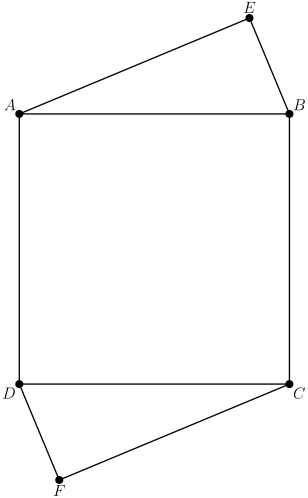
Square has side length and points and are exterior to the square such that and Find
小提示:
因为 ,角 和 都是直角。
Since angles and are right angles
大提示:
将 延长过 ,将 延长过 ,交于 ,并寻找与 全等的直角三角形。
Extend beyond and beyond to meet at and look for right triangles congruent to
解答:
因为 ,三角形 和 分别在 和 处为直角,且它们全等(边长 、、)。将 延长过 ,将 延长过 ,直到两条直线交于 。
于是 这两个角之和为 ,所以 ,三角形 与 全等(角相等且斜边 )。因此 且 。
所以 ,,且它们在 处成直角,因此 。
Since triangles and are right-angled at and and they are congruent (sides ). Extend beyond and beyond until the two lines meet at
Then These two angles sum to so and triangle is congruent to (equal angles and hypotenuse ). Hence and
Therefore and with a right angle between them at so
其他年份的第 3 题
1983 AIME · 1984 AIME · 1985 AIME · 1986 AIME · 1987 AIME · 1988 AIME · 1989 AIME · 1990 AIME · 1991 AIME · 1992 AIME · 1993 AIME · 1994 AIME · 1995 AIME · 1996 AIME · 1997 AIME · 1998 AIME · 1999 AIME · 2000 AIME I · 2000 AIME II · 2001 AIME I · 2001 AIME II · 2002 AIME I · 2002 AIME II · 2003 AIME I · 2003 AIME II · 2004 AIME I · 2004 AIME II · 2005 AIME I · 2005 AIME II · 2006 AIME I · 2006 AIME II · 2007 AIME I · 2008 AIME I · 2008 AIME II · 2009 AIME I · 2009 AIME II · 2010 AIME I · 2010 AIME II · 2011 AIME I · 2011 AIME II · 2012 AIME I · 2012 AIME II · 2013 AIME I · 2013 AIME II · 2014 AIME I · 2014 AIME II · 2015 AIME I · 2015 AIME II · 2016 AIME I · 2016 AIME II · 2017 AIME I · 2017 AIME II · 2018 AIME I · 2018 AIME II · 2019 AIME I · 2019 AIME II · 2020 AIME I · 2020 AIME II · 2021 AIME I · 2021 AIME II · 2022 AIME I · 2022 AIME II · 2023 AIME I · 2023 AIME II · 2024 AIME I · 2024 AIME II · 2025 AIME I · 2025 AIME II · 2026 AIME I · 2026 AIME II