
2009 AMC 10A 第 15 题
先试着解答 2009 AMC 10A 第 15 题,然后核对你的答案与精心整理的解答,解答来自 LIVE by Po-Shen Loh。你也可以参加完整限时模拟考试、查看全部 2009 AMC 10A 解答,或核对答案。
所有题目均经美国数学协会(MAA)官方合法授权使用。
15.
图中的 、、 和 是一个图形序列的前几项。当 时, 由 构造而成:在它外面围上一个正方形,并且新正方形每条边上的菱形数量比 外部正方形每条边上的菱形数量多一个。例如,图形 有 个菱形。图形 中有多少个菱形?
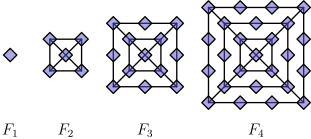
The figures and shown are the first in a sequence of figures. For is constructed from by surrounding it with a square and placing one more diamond on each side of the new square than had on each side of its outside square. For example, figure has diamonds. How many diamonds are there in figure
其他年份的第 15 题
2000 AMC 10 · 2001 AMC 10 · 2002 AMC 10A · 2002 AMC 10B · 2003 AMC 10A · 2003 AMC 10B · 2004 AMC 10A · 2004 AMC 10B · 2005 AMC 10A · 2005 AMC 10B · 2006 AMC 10A · 2006 AMC 10B · 2007 AMC 10A · 2007 AMC 10B · 2008 AMC 10A · 2008 AMC 10B · 2009 AMC 10B · 2010 AMC 10A · 2010 AMC 10B · 2011 AMC 10A · 2011 AMC 10B · 2012 AMC 10A · 2012 AMC 10B · 2013 AMC 10A · 2013 AMC 10B · 2014 AMC 10A · 2014 AMC 10B · 2015 AMC 10A · 2015 AMC 10B · 2016 AMC 10A · 2016 AMC 10B · 2017 AMC 10A · 2017 AMC 10B · 2018 AMC 10A · 2018 AMC 10B · 2019 AMC 10A · 2019 AMC 10B · 2020 AMC 10A · 2020 AMC 10B · 2021 AMC 10A Spring · 2021 AMC 10B Spring · 2021 AMC 10A Fall · 2021 AMC 10B Fall · 2022 AMC 10A · 2022 AMC 10B · 2023 AMC 10A · 2023 AMC 10B · 2024 AMC 10A · 2024 AMC 10B · 2025 AMC 10A · 2025 AMC 10B