
2002 AIME II 详解
向下滚动即可查看来自 LIVE by Po-Shen Loh 的精心整理的解答,打印PDF 解答,查看答案,或参加完整限时模拟考试。
所有题目均经美国数学协会(MAA)官方合法授权使用。
1.
已知:
和 都是从 到 (含端点)的整数;
是把 的数字顺序反转后所形成的数;
。
可能有多少个不同的值?
Given that
and are both integers between and inclusive;
is the number formed by reversing the digits of and
How many distinct values of are possible?
小提示:
写成 ;那么 ,再计算 。
Write then and compute
大提示:
,而且 和 都至少为 ,因为 和 都是三位数。
and both and are at least because and are both three-digit numbers
解答:
设 ,其中 、、 是数字。则 ,所以
因为 和 都是三位数, 和 都可以从 取到 ,所以 可以是 、、、 中的任意一个。每个值给出一个不同的 的倍数,因此共有 个不同的 值。
Write with digits Then so
Since both and are three-digit numbers, both and run from to so can be any of Each choice gives a different multiple of so there are distinct values of
2.
立方体的三个顶点为 、 和 。求该立方体的表面积。
Three of the vertices of a cube are and What is the surface area of the cube?
小提示:
计算三条两两距离 、 和 。
Compute the three pairwise distances and
大提示:
立方体中三个两两等距的顶点由面对角线相连;边长为 的立方体,其面对角线长为 。
Three mutually equidistant vertices of a cube are joined by face diagonals, and a face diagonal of a cube with edge has length
解答:
计算距离的平方:,,且 。所以 、、 构成边长为 的等边三角形。
立方体中三个两两等距的顶点必由面对角线相连,而边长为 的立方体的面对角线长为 。因此 ,表面积为 。
Compute the squared distances: and So and form an equilateral triangle with side
Three mutually equidistant vertices of a cube must be joined by face diagonals, and a face diagonal of a cube with edge has length Thus and the surface area is
3.
已知 ,其中 、、 是正整数,它们组成递增等比数列,且 是某个整数的平方。求 。
It is given that where and are positive integers that form an increasing geometric sequence and is the square of an integer. Find
小提示:
合并对数:。在等比数列中 ,所以 。
Combine the logs: In a geometric sequence so
大提示:
由 ,写出 ,并要求 整除 。
With write and require that divide
解答:
对数相加得 ,所以 。等比数列满足 ,于是 ,从而 ,并且 。
因为数列递增, 是正平方数,所以 ,其中 。候选值为 、、、、。同时 必须整除 ,候选值中只有 满足,此时 。
确实,、、 是公比为 的等比数列,所以 。
Adding the logs gives so In a geometric sequence hence so and
Since the sequence is increasing, is a positive perfect square, so for some giving candidates Also must divide and of the candidates only does, with
Indeed is geometric with ratio and
4.
用边长为 个单位的正六边形庭院砖围出一个花园,砖块边对边摆放,每一边有 块。图示为 时围绕花园的砖块路径。
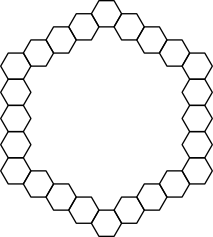
若 ,则路径围成的花园面积(不包括路径本身)为 平方单位,其中 是正整数。求 除以 的余数。
Patio blocks that are regular hexagons unit on a side are used to outline a garden by placing the blocks edge to edge with on each side. The diagram indicates the path of blocks around the garden when
If then the area of the garden enclosed by the path, not including the path itself, is square units, where is a positive integer. Find the remainder when is divided by
小提示:
花园本身也是由单位六边形组成的六边形阵列,每边有 块;从中心六边形加上 、、、 的环来计数。
The garden is itself a hexagonal block of unit hexagons with on each side; count it as a center hexagon plus rings of
大提示:
花园含有 个六边形,每个单位六边形由 个边长为 的等边三角形组成。
The garden holds hexagons, and each unit hexagon is equilateral triangles of side
解答:
由路径围成的花园本身是一个单位六边形阵列,每边有 个六边形。从中心向外按 、、 个六边形的环来计数,它包含 个小六边形。取 ,得到 个。
每个单位六边形由 个边长为 的等边三角形组成,所以面积为 。因此花园面积是 倍的 ,所以 ,除以 的余数为 。
The garden enclosed by the path is itself a hexagonal arrangement of unit hexagons with on each side. Counting from the center outward in rings of hexagons, it contains blocks, which for is
Each unit hexagon consists of equilateral triangles of side so its area is The garden’s area is therefore times so and the remainder upon division by is
5.
求所有正整数 的和,其中 和 是非负整数,并且 不是 的因数。
Find the sum of all positive integers where and are non-negative integers, for which is not a divisor of
小提示:
,所以 不能整除 当且仅当 或 。
so fails to divide exactly when or
大提示:
如果 和 都至少为 ,则 且 ,所以只有纯 的幂或纯 的幂可能满足条件。
If and are both at least then and so only pure powers of or of can work
解答:
对 ,它不是整数当且仅当 或 。
若 ,则 (因为 ),类似地 ,所以这种情形没有可行的 。若 ,条件为 ,成立于 、、、,给出 、、、。若 ,条件为 ,成立于 、,给出 、。(当 时条件不成立。)
所求和为 。
With which fails to be an integer exactly when or
If then (since ) and similarly so no such works. If the condition is which holds for giving If the condition is which holds for giving (For the condition fails.)
The sum is
6.
求与下式最接近的整数:
Find the integer that is closest to
小提示:
分解 ,并用部分分式让求和裂项相消。
Factor and use partial fractions to make the sum telescope
大提示:
前端只剩下 、、、,再减去四个接近 的小尾项。
Only survive at the front, minus four tiny tail terms near
解答:
因为 ,所以该和裂项相消:
令 等于 乘以四个正尾项之和。于是 。原式的值为 ,所以它严格介于 与 之间。因此最接近的整数是 。
Since the sum telescopes:
Let be times the sum of the four positive tail fractions. Then The value of the expression is so it lies strictly between and Hence the closest integer is
7.
已知对所有正整数 ,求最小的正整数 ,使得 是 的倍数。
It is known that, for all positive integers Find the smallest positive integer such that is a multiple of
小提示:
需要 是 的倍数,其中因子 自动满足。
You need to be a multiple of and the factor comes for free
大提示:
是奇数,所以 必须整除 或 ;另外 必须整除 、,或 。比较合并同余后的最小解。
is odd, so must divide or separately must divide or Compare the smallest solutions of the combined congruences.
解答:
该平方和是 的倍数,当且仅当 是 的倍数。因子 总会整除 (若 ,则 能被 整除),所以只需考虑 和 。
由于 是奇数,且 、 不可能都为偶数, 必须整除 或 ,所以 或 。类似地, 必须整除 、、 中的一个,得到 、 或 。将每一对同余条件合并到模 ,所得最小正解依次为 、、、、 和 。
最小的是 :确实, 是 的倍数。
The sum is a multiple of exactly when is a multiple of The factor always divides (if then is divisible by ), so only and matter.
Since is odd and cannot both be even, must divide or so or Similarly must divide one of giving or Combining each pair of congruences modulo the smallest positive solutions are and
The least is indeed is a multiple of
8.
求最小的正整数 ,使方程 没有整数解 。(记号 表示不大于 的最大整数。)
Find the least positive integer for which the equation has no integer solutions for (The notation means the greatest integer less than or equal to )
小提示:
有解,当且仅当某个整数 落在 中。
has a solution exactly when some integer lies in
大提示:
该区间长度为 ,所以当 时,它一定含有整数。然后计算 在 、、、、 时的值。
That interval has length so it always contains an integer when Then compute for
解答:
值 能被取到,当且仅当某个整数 满足 ,也就是区间 中含有整数。它的长度为 ;当该长度至少为 ,也就是 时,所有 都能被取到。
对更大的 ,直接检查:、、、、 分别给出 、、、、。因为 ,而 ,所以不可能取到 。因此最小的此类 是 。
The value is attained exactly when some integer satisfies that is, when the interval contains an integer. Its length is which is at least whenever — so every is attained.
For larger check directly: give Since and the value is never attained, so the least such is
9.
设 为集合 。令 为由 的两个非空不相交子集组成的二元集合的个数。(若两个集合没有共同元素,则称它们不相交。)求 除以 所得的余数。
Let be the set Let be the number of sets of two non-empty disjoint subsets of (Disjoint sets are defined as sets that have no common elements.) Find the remainder obtained when is divided by
小提示:
先构造有序对 :对 个元素中的每一个,选择放入 、放入 ,或两者都不放。
Build an ordered pair of disjoint subsets by sending each of the elements to to or to neither
大提示:
用容斥原理减去 或 为空的有序对,再除以 ,得到无序的二元集合。
Subtract the pairs where or is empty by inclusion-exclusion, then divide by to make the pairs unordered
解答:
先数不相交子集的有序对 。对于这 个元素中的每一个,可以选择放入 、放入 ,或两者都不放,因此共有 个有序对。其中 个有 为空, 个有 为空,而 被重复减了一次,所以两个子集都非空的有序对共有 个。
不相交的非空子集不可能相等,所以每个集合 被数了两次,得到 。模 的余数是 。
Count ordered pairs of disjoint subsets first: each of the elements goes in in or in neither, for pairs. Among these, have empty and have empty, with the pair counted in both, so ordered pairs have both subsets non-empty.
Disjoint non-empty subsets are never equal, so each set is counted twice, giving The remainder mod is
10.
一位心不在焉的教授在求某个角的正弦值时,没有注意到计算器的角度单位设置错误,却幸运地得到了正确答案。使 度的正弦等于 弧度的正弦的两个最小正实数 分别为 和 ,其中 、、、 是正整数。求 。
While finding the sine of a certain angle, an absent-minded professor failed to notice that his calculator was not in the correct angular mode. He was lucky to get the right answer. The two least positive real values of for which the sine of degrees is the same as the sine of radians are and where and are positive integers. Find
小提示:
度等于 弧度,所以要求解 。
degrees is radians, so solve
大提示:
两个角的正弦相等,当它们相差 的整数倍,或它们的和等于 加上 的整数倍;在两种情形中分别取最小正值。
Two angles have equal sines when they differ by a multiple of or add up to plus a multiple of take the smallest positive case of each
解答:
度对应 弧度,所以需要 。两个角正弦相等当且仅当它们相差 的整数倍,或者和为 加上 的整数倍。
第一种情形给出 ,所以 ,其最小正值为 。第二种情形给出 ,所以 ,其最小正值为 。第二族的下一个值是其首个值的三倍,因此大于第一族的最小值;其余各值更大。所以这两个就是最小的两个解。
对应 与 ,得到 、、、,所以 。
An angle of degrees is radians, so we need Two angles have equal sines exactly when they differ by a multiple of or sum to plus a multiple of
The first case gives so with least positive value The second gives so with least positive value The next value in the second family is three times its first and therefore exceeds the first family’s least value; all later values are larger. Thus these are the two smallest solutions.
Matching and gives so
11.
两个不同的实数项无穷等比级数都收敛且和为 ,并且第二项相同。其中一个级数的第三项为 ,两个级数的公共第二项可写成 ,其中 、、 是正整数,且 不被任何素数的平方整除。求 。
Two distinct, real, infinite geometric series each have a sum of and have the same second term. The third term of one of the series is and the second term of both series can be written in the form where and are positive integers and is not divisible by the square of any prime. Find
小提示:
一个公比为 、和为 的等比级数,首项为 ,因此第二项是 。
A geometric series with ratio and sum has first term so its second term is
大提示:
第二项相等迫使两个公比满足 ;于是 成为一个三次方程,令 后可因式分解。
Equal second terms force the ratios to satisfy then becomes a cubic that factors after substituting
解答:
公比为 、和为 的等比级数首项为 ,所以第二项是 。若两个公比分别为 和 ,则 ,即 。由于两个级数不同,,因而 。
设公比为 的级数的第三项为 ,则 。令 ,方程变为 。根 会使 ,两个级数相同;根 会使 ,级数发散。因此 。
公共第二项为 所以 、、,从而 。
A geometric series with ratio and sum has first term so its second term is If the two ratios are and then gives and since the series are distinct, forcing
Say the series with ratio has third term i.e. Substituting gives The root makes (the series would coincide), and forces which diverges. So
The common second term is so and
12.
一名篮球运动员每次投篮命中的概率恒为 ,并且与之前的投篮无关。令 为投完 次后命中数与出手数之比。事件 与 同时发生的概率(后一条件中的 取遍满足 的整数)为 ,其中 、、 和 都是素数,、 和 都是正整数。求 。
A basketball player has a constant probability of of making any given shot, independent of previous shots. Let be the ratio of shots made to shots attempted after shots. The probability that and for all such that is given to be where and are primes, and and are positive integers. Find
小提示:
把(出手次数,命中次数)看作格路径;条件 将每次投篮后的命中数限制在 以内。
Track (shots attempted, shots made) as a lattice path; the condition caps the number made at after each shot
大提示:
通过把每个点的两个前驱点计数相加,数出到 的受限路径;每个有效序列的概率都是 。
Count the constrained paths to by adding the counts of the two predecessors at each point; every valid sequence has probability
解答:
把球员的过程记录为点 的路径,其中 是 次出手后的命中数。条件 将 限制在 以内;当 时,这些上限分别为 、、、、、、、、,而 表示路径终点为 。
在每个允许点处,把它的两个前驱点的计数相加(未命中时 不变,命中时它增加 )。当 时,最高允许高度处的计数依次为 、、、、、、;第十次投篮必须命中,所以共有 个投篮序列满足条件。每个序列有 次命中和 次未中,因此概率为
因此 ,且 ,得到 。
Record the player’s progress as a path through points where is the number of shots made after attempts. The condition caps at which for is and means the path ends at
Count the allowed paths by adding, at each point, the counts of its two predecessors (a miss keeps a make raises it by ). The counts at the maximum allowed heights for come out to and the tenth shot must be a make, so shot sequences qualify. Each consists of makes and misses, so the probability is
Thus and giving
13.
在三角形 中,点 在 上,且 、;点 在 上,且 、;并且 。线段 与 交于 。点 和 在 上,使得 平行于 ,且 平行于 。已知三角形 与三角形 的面积之比为 ,其中 和 是互质正整数。求 。
In triangle point is on with and point is on with and and and intersect at Points and lie on so that is parallel to and is parallel to It is given that the ratio of the area of triangle to the area of triangle is where and are relatively prime positive integers. Find
小提示:
用质量点法:赋质量 、、 于 、、,即可同时平衡两条顶点连线并确定 ;延长 与 交于 。
Mass points: masses at balance both cevians and locate extend to meet at
大提示:
三角形 是三角形 在一个位似变换下的像;该变换以 为中心,把 映到 ,所以面积比为 。
Triangle is the image of triangle under the homothety centered at taking to so the area ratio is
解答:
赋质量 于 ,质量 于 ,质量 于 。这样 在 上满足平衡关系(),而 在 上满足平衡关系(),所以 和 交于质心 ,其总质量为 。延长 与 交于 ,则 处质量为 。因此在线段 上有 ,也就是 。
以 为中心、比例为 的位似变换把 映到 ,并把直线 映到自身;它把直线 映到过 的平行线,也就是 ,把直线 映到 。因此它把三角形 映到三角形 ,所以
因为 ,答案为 。
Assign masses at at and at Then balances () and balances (), so the cevians and meet at the center of mass of total mass Extending to meet at the mass at is so on segment we get that is,
The homothety centered at with ratio sends to and maps line to itself; it carries line to the parallel line through — which is line — and line to line Hence it maps triangle onto triangle and
Since the answer is
14.
三角形 的周长为 ,且角 是直角。画一个半径为 的圆,圆心 在 上,并且该圆与 和 相切。已知 ,其中 和 是互质的正整数。求 。
The perimeter of triangle is and angle is a right angle. A circle of radius with center on is drawn so that it is tangent to and Given that where and are relatively prime positive integers, find
小提示:
该圆与 恰好相切于 ,所以从 引出的两条切线给出 ,其中 是 上的切点。
The circle touches at itself, so the tangents from give where is the tangency point on
大提示:
直角三角形 与 相似,而小三角形的周长是 ;比较周长比例得到只含 的方程。
Right triangles and are similar, and the small one’s perimeter is comparing perimeter ratios gives an equation in alone
解答:
设 为圆与 的切点。因为 ,且 在 上,圆心到直线 的距离为 ,所以圆恰好与 相切于点 。由从 引出的两条切线相等,得 。直角三角形 和 (直角分别在 和 )共有角 ,所以相似,比例为 。
小三角形的周长为 。又因为 ,相似三角形的周长比等于相似比,因此 。化简得 ,所以 。
相似比为 ,所以 。由周长得 ,且 ,于是 ,解得 ,所以 。因此 。
Let be the point where the circle touches Since and lies on at a distance from line equal to the circle is tangent to at itself, so the two tangents from give Right triangles and (right angles at and ) share angle so they are similar with ratio
The small triangle’s perimeter is and since Perimeters of similar triangles are in the ratio of similarity, so which simplifies to Thus
The ratio of similarity is then so From the perimeter, and so giving and Hence
15.
圆 和 相交于两点,其中一点是 ,并且两圆半径的乘积为 。-轴和直线 都与两个圆相切,其中 。已知 可写成 的形式,其中 、、 是正整数, 不被任何素数的平方整除,且 与 互质。求 。
Circles and intersect at two points, one of which is and the product of their radii is The -axis and the line where are tangent to both circles. It is given that can be written in the form where and are positive integers, is not divisible by the square of any prime, and and are relatively prime. Find
小提示:
两个圆心都在两条切线所成角的角平分线上;若该角平分线与 -轴的夹角为 ,则 ,且每个圆的半径为 。
Both centers lie on the bisector of the angle between the two tangent lines; if the angle from the -axis to the bisector is then and each radius is
大提示:
把 代入圆方程,会得到两个圆心的 满足同一个二次方程,所以由韦达定理 ;再结合 。
Plugging into the circle equation gives the same quadratic in for both centers, so by Vieta; combine with
解答:
两个圆都与 -轴和 相切,所以两个圆心都在第一象限中这两条直线夹角的角平分线上。若该角平分线与 -轴的夹角为 ,则 ,并且每个圆心形如 ,半径为 (即到 -轴的距离)。
因为 在每个圆上, ,展开得 和 都满足同一个二次方程,所以由韦达定理 。于是 ,所以 ,且 。
最后,所以 。
Both circles are tangent to the -axis and to so both centers lie on the bisector of the first-quadrant angle between those lines. If the angle from the -axis to the bisector is then and each center has the form with radius (its distance to the -axis).
Since lies on each circle, which expands to Both and satisfy this one quadratic, so by Vieta’s formulas Then so and
Finally, so